Home / Symbols / Furniture Floor Plan Symbols
Furniture Floor Plan Symbols
Furniture symbols on floor plans show the intended placement and scale of furnishings in each room. These symbols are drawn to scale so you can judge whether furniture fits comfortably and leaves adequate circulation space.
15 symbols across 3 subcategories
Measure any floor plan in minutes
Upload a floor plan, trace the perimeter, and get square footage instantly.
Living Room Furniture
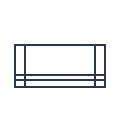
Sofa
A long rectangle (approximately 84 by 36 inches) with a thinner rectangle along one long edge representing the backrest. May include small squares at each end for armrests.
Also: couch, three-seater
Found in: Living rooms, family rooms, dens, media rooms

Loveseat
Similar shape to a sofa but shorter. Approximately 60 by 34 inches. Drawn as a rectangle with a back strip, smaller than a full sofa.
Also: two-seater, settee, small sofa
Found in: Living rooms, bedrooms, smaller sitting areas, reading nooks

Armchair
A small square or rectangle (about 34 by 34 inches) with a back strip and two side strips representing armrests. Often shown angled toward a conversation area.
Also: accent chair, lounge chair, easy chair
Found in: Living rooms, bedrooms, reading corners, offices

Coffee Table
A rectangle or oval centered in front of the sofa, typically 48 by 24 inches. Drawn as a simple outline, lower and smaller than surrounding seating.
Also: cocktail table, center table
Found in: Living rooms, in front of sofas, center of seating arrangements
Bedroom Furniture
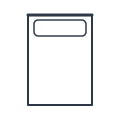
Twin Bed
A rectangle measuring 38 by 75 inches in plan view, with a thinner rectangle at one short end representing the headboard. Pillows may be shown as small ovals.
Also: single bed, twin mattress
Found in: Children's rooms, guest rooms, dormitories
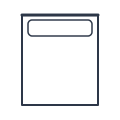
Full Bed
A rectangle measuring 54 by 75 inches with a headboard strip at one end. Noticeably wider than a twin but shorter than a queen.
Also: double bed, full-size bed
Found in: Guest rooms, smaller bedrooms, teen bedrooms
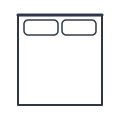
Queen Bed
A rectangle measuring 60 by 80 inches with a headboard strip. The most common bed size in floor plans. Shown centered on the main wall of master and secondary bedrooms.
Also: queen-size bed, queen mattress
Found in: Master bedrooms, guest rooms, secondary bedrooms
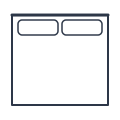
King Bed
A rectangle measuring 76 by 80 inches with a headboard strip. The widest standard bed. Requires a room at least 12 by 12 feet for comfortable clearance on all sides.
Also: king-size bed, eastern king, king mattress
Found in: Master bedrooms, large guest suites
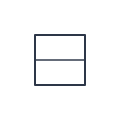
Nightstand
A small square (approximately 24 by 24 inches) placed adjacent to the bed on one or both sides.
Also: bedside table, night table, end table
Found in: Beside beds in bedrooms and guest rooms
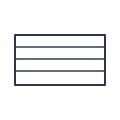
Dresser
A long rectangle (approximately 60 by 18 inches) placed against a wall, representing a multi-drawer storage unit. Wider than it is deep.
Also: chest of drawers, bureau, bedroom dresser
Found in: Bedrooms, dressing areas, walk-in closets
Work & Dining Furniture

Dining Table
A rectangle, circle, or oval surrounded by small squares or circles representing chairs. A standard rectangular dining table for six is about 72 by 36 inches.
Also: kitchen table, eating table
Found in: Dining rooms, eat-in kitchens, breakfast nooks

Desk
A rectangle approximately 60 by 30 inches, often shown with a small square for a chair behind it. May include an L-shaped extension for a return.
Also: office desk, writing desk, work desk
Found in: Home offices, bedrooms, studies, libraries
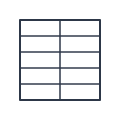
Bookshelf
A narrow rectangle placed against the wall (approximately 36 by 12 inches), sometimes with horizontal lines inside indicating shelves. Very shallow depth in plan view.
Also: bookcase, shelving unit, wall shelf
Found in: Offices, living rooms, bedrooms, hallways, libraries

TV Stand
A rectangle (approximately 48 to 60 inches wide by 18 inches deep) placed against a wall, often with a thin line above or behind it representing a mounted television.
Also: media console, entertainment center, TV cabinet
Found in: Living rooms, bedrooms, family rooms, media rooms
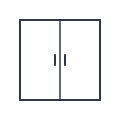
Wardrobe
A large rectangle (approximately 48 by 24 inches) placed against a wall, representing a freestanding clothes storage unit. Drawn deeper than a bookshelf.
Also: armoire, freestanding closet, clothes cabinet
Found in: Bedrooms without built-in closets, guest rooms, dressing areas
How to Read Furniture Floor Plan Symbols
Furniture is drawn in plan view. Meaning you are looking straight down from above. A bed looks like a rectangle with a smaller rectangle at one end for the headboard. A sofa is a long rectangle with a thinner strip along the back representing the backrest. Dining tables are circles, ovals, or rectangles depending on style, often surrounded by small squares or circles representing chairs.
The key to reading furniture symbols is understanding scale. On a 1/4-inch scale plan, a king bed (76 by 80 inches) appears as a rectangle about 19mm by 20mm on paper. Always use the scale bar to verify sizes. If furniture seems to fill the entire room on the drawing, the room really is that tight. Trust the plan.
Furniture is often shown in a lighter line weight or a different color than walls and fixtures to make it clear these are movable items, not permanent construction. Some plans show furniture as shaded or filled shapes while walls remain as outlines. This visual hierarchy helps you focus on the structure first and furnishing second.
When evaluating a floor plan, check that furniture placement allows for pathways of at least 36 inches between pieces and 42 inches in main traffic routes. Doors should be able to open fully without hitting furniture. Pull-out items like desk chairs and dining chairs need clearance behind them. Typically 36 inches from the table edge to any wall or obstruction.
Common Mistakes
People often assume furniture on a floor plan is the only option. It is usually a suggestion showing that the room can accommodate standard pieces. Another mistake is ignoring scale and assuming a room is bigger than it is because the furniture symbols look small. Finally, many people forget to account for the space needed to actually use furniture. A desk needs chair pull-back space, a dresser needs room to open drawers.
Pro Tips
- Measure your actual furniture and compare it to the plan's scale. The architect's suggested layout may not match your pieces.
- Allow at least 36 inches of walkway between furniture pieces for comfortable movement through a room.
- Check that doors and drawers can open fully without hitting nearby furniture or walls.
Frequently Asked Questions
How do you read furniture symbols on a floor plan?
Furniture is drawn in plan view. Meaning you are looking straight down from above. A bed looks like a rectangle with a smaller rectangle at one end for the headboard. A sofa is a long rectangle with a thinner strip along the back representing the backrest. Dining tables are circles, ovals, or rectangles depending on style, often surrounded by small squares or circles representing chairs.
What are common mistakes when reading furniture symbols?
People often assume furniture on a floor plan is the only option. It is usually a suggestion showing that the room can accommodate standard pieces. Another mistake is ignoring scale and assuming a room is bigger than it is because the furniture symbols look small. Finally, many people forget to account for the space needed to actually use furniture. A desk needs chair pull-back space, a dresser needs room to open drawers.
What does a sofa look like on a floor plan?
A long rectangle (approximately 84 by 36 inches) with a thinner rectangle along one long edge representing the backrest. May include small squares at each end for armrests. Typically found in: living rooms, family rooms, dens, media rooms.
What's the difference between a sofa and a twin bed on a floor plan?
A sofa is shown as a long rectangle (approximately 84 by 36 inches) with a thinner rectangle along one long edge representing the backrest, while a twin bed is shown as a rectangle measuring 38 by 75 inches in plan view, with a thinner rectangle at one short end representing the headboard. The two are drawn differently so floor plan readers can distinguish them at a glance.
Which furniture symbols are most commonly seen on residential floor plans?
The most common furniture symbols you will see on a typical residential floor plan are: Sofa (a long rectangle (approximately 84 by 36 inches) with a thinner rectangle along one long edge representing the backrest); Loveseat (similar shape to a sofa but shorter: approximately 60 by 34 inches); Armchair (a small square or rectangle (about 34 by 34 inches) with a back strip and two side strips representing armrests); Coffee Table (a rectangle or oval centered in front of the sofa, typically 48 by 24 inches). The exact set depends on the home's layout and the architect's drawing conventions.
Download Furniture Floor Plan Symbols Reference Sheet (PDF)
Print-friendly reference with all 15 symbols. Keep it on your desk or job site.
Related Symbol Categories
Bedroom Floor Plan Symbols
10 symbols →
Living Room Floor Plan Symbols
9 symbols →
Kitchen Floor Plan Symbols
10 symbols →
Ready to measure a floor plan?
PlanSnapper calculates square footage from any floor plan image. Free to start.