Home / Symbols / Door Floor Plan Symbols
Door Floor Plan Symbols
Door symbols on floor plans show the type, size, and swing direction of every door in a building. Understanding these symbols helps you visualize how rooms connect and how traffic flows through a space.
10 symbols across 2 subcategories
Measure any floor plan in minutes
Upload a floor plan, trace the perimeter, and get square footage instantly.
Interior Doors
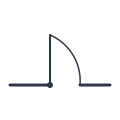
Single Door
A straight line representing the door panel with a quarter-circle arc showing the 90-degree swing direction. The hinge point is where the line meets the wall.
Also: swing door, hinged door, passage door
Found in: Between rooms, closets, bathrooms, bedrooms

Double Door
Two single-door symbols mirrored at the center of the opening, each with its own quarter-circle arc. Both panels swing away from the centerline.
Also: French entry, pair of doors
Found in: Formal dining rooms, living rooms, master bedrooms, wide hallways
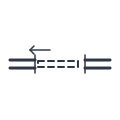
Pocket Door
A thin rectangle drawn sliding into the wall cavity, shown with dashed lines inside the wall to indicate the hidden pocket where the door retracts.
Also: recessed sliding door, disappearing door
Found in: Small bathrooms, closets, spaces where swing clearance is limited

Bifold Door
Two connected panels drawn in a V or zigzag shape, showing how the door folds at the center hinge. Usually shown partially open.
Also: folding door, bi-fold
Found in: Closets, laundry rooms, pantries, utility spaces

French Door
Similar to a double door symbol but typically shown with small rectangles or grid patterns on each panel to indicate glass panes. Both doors swing open from the center.
Also: glass double door, patio door
Found in: Patios, gardens, formal living areas, between interior and exterior spaces
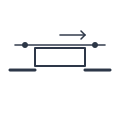
Barn Door
A rectangle drawn parallel to and in front of the wall, with an arrow or track line above indicating the sliding direction. Unlike a pocket door, it remains visible on the wall surface.
Also: sliding barn door, surface-mounted slider
Found in: Bathrooms, pantries, home offices, decorative room dividers
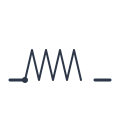
Accordion Door
A zigzag or pleated line spanning the door opening, representing multiple narrow panels that fold together like an accordion when opened.
Also: folding partition, concertina door
Found in: Room dividers, wide openings, conference rooms, closets
Exterior Doors
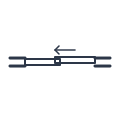
Sliding Door
Two overlapping rectangles in the wall opening, showing one fixed panel and one operable panel that slides horizontally. A small arrow may indicate which panel moves.
Also: patio slider, gliding door, sliding glass door
Found in: Patios, decks, balconies, back entrances

Revolving Door
A circle drawn at the entrance with three or four lines radiating from the center like a pinwheel, representing the rotating door wings inside the cylindrical enclosure.
Also: rotary door, spinning door
Found in: Commercial building entrances, hotel lobbies, office towers
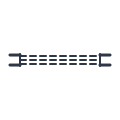
Garage Door
A series of horizontal lines spanning a wide wall opening, representing the segmented panels of an overhead roll-up door. Often labeled with width dimensions.
Also: overhead door, roll-up door, sectional door
Found in: Garages, loading docks, workshops, storage buildings
How to Read Door Floor Plan Symbols
Door symbols on a floor plan are drawn where the door sits within the wall. The most important thing to look for is the arc or swing line. This shows you which direction the door opens and how much clearance it needs. A standard hinged door is drawn as a straight line (the door itself) with a quarter-circle arc showing its swing path. The hinge side is where the line meets the wall, and the arc swings toward the room the door opens into.
Sliding and pocket doors look quite different from hinged doors. Instead of an arc, you will see parallel lines indicating the door panel slides along or into the wall. Pocket doors disappear into the wall cavity, so they are drawn partially inside the wall. Sliding doors show the overlap of two panels, which is helpful when figuring out which side opens.
Pay close attention to the wall thickness where the door is placed. Exterior doors are typically shown in thicker walls and are wider (36 inches is standard). Interior doors sit in thinner walls and are usually 28 to 32 inches wide. The scale of the drawing matters. Always check the scale bar before assuming door sizes.
When reading a floor plan, trace the door swings to understand furniture placement and traffic flow. A door that swings into a room affects where you can put furniture along that wall. Bifold and pocket doors are often used where swing clearance is tight, like closets and small bathrooms.
Common Mistakes
The most common mistake is confusing the swing direction. The arc shows where the door sweeps, not a decorative element. If the arc opens into the hallway, the door opens outward from the room. Another frequent error is mixing up sliding doors and pocket doors. Sliding doors have two overlapping panels visible in the wall opening, while pocket doors show the panel receding into the wall cavity. Finally, people often overlook door widths. Standard interior doors are 2'8" to 3'0", but accessibility codes require at least 32 inches of clear opening. Always verify dimensions are noted on the plan.
Pro Tips
- The arc always shows the door's swing path. Follow it to see which way the door opens and how much floor space it needs.
- Double-check that bedroom and bathroom doors swing inward so they don't block hallway traffic.
- Look for pocket or barn door symbols in tight spaces. They indicate the architect planned for limited swing clearance.
Frequently Asked Questions
How do you read door symbols on a floor plan?
Door symbols on a floor plan are drawn where the door sits within the wall. The most important thing to look for is the arc or swing line. This shows you which direction the door opens and how much clearance it needs. A standard hinged door is drawn as a straight line (the door itself) with a quarter-circle arc showing its swing path. The hinge side is where the line meets the wall, and the arc swings toward the room the door opens into.
What are common mistakes when reading door symbols?
The most common mistake is confusing the swing direction. The arc shows where the door sweeps, not a decorative element. If the arc opens into the hallway, the door opens outward from the room. Another frequent error is mixing up sliding doors and pocket doors. Sliding doors have two overlapping panels visible in the wall opening, while pocket doors show the panel receding into the wall cavity. Finally, people often overlook door widths. Standard interior doors are 2'8" to 3'0", but accessibility codes require at least 32 inches of clear opening. Always verify dimensions are noted on the plan.
What does a single door look like on a floor plan?
A straight line representing the door panel with a quarter-circle arc showing the 90-degree swing direction. The hinge point is where the line meets the wall. Typically found in: between rooms, closets, bathrooms, bedrooms.
What's the difference between a single door and a sliding door on a floor plan?
A single door is shown as a straight line representing the door panel with a quarter-circle arc showing the 90-degree swing direction, while a sliding door is shown as two overlapping rectangles in the wall opening, showing one fixed panel and one operable panel that slides horizontally. The two are drawn differently so floor plan readers can distinguish them at a glance.
Which door symbols are most commonly seen on residential floor plans?
The most common door symbols you will see on a typical residential floor plan are: Single Door (a straight line representing the door panel with a quarter-circle arc showing the 90-degree swing direction); Double Door (two single-door symbols mirrored at the center of the opening, each with its own quarter-circle arc); Pocket Door (a thin rectangle drawn sliding into the wall cavity, shown with dashed lines inside the wall to indicate the hidden pocket where the door retracts); Bifold Door (two connected panels drawn in a v or zigzag shape, showing how the door folds at the center hinge). The exact set depends on the home's layout and the architect's drawing conventions.
Download Door Floor Plan Symbols Reference Sheet (PDF)
Print-friendly reference with all 10 symbols. Keep it on your desk or job site.
Related Symbol Categories
Window Floor Plan Symbols
10 symbols →
Wall Floor Plan Symbols
9 symbols →
Architectural Floor Plan Symbols
10 symbols →
Ready to measure a floor plan?
PlanSnapper calculates square footage from any floor plan image. Free to start.